A HYBRID NOTEBOOK OF POETICS AND PORNOGRAPHIES

Pornography Disclaimer

This is a an imaginary diary of facts, confessions, or messages. This is a notebook of working but broken ideas, lines, images, notes on books I'm reading, writers I admire, and brief fantasies of language. Here unfiltered  all mannerings pseudo-private, publicized, ur-. Here I am art and unrevealed: poetic, political and pop. These are my moonlit rough beginnings and should not be taken literally, directly, truthfully, reliably, and none of it is legally binding. These lies are all choreographed, but only haphazardly. Beware.
Showing posts with label Simic. Show all posts

25.3.08

SPRING SPECIMEN

"The Hanged Man is one of the most mysterious cards in the tarot deck. It is simple, but complex. It attracts, but also disturbs. It contradicts itself in countless ways. The Hanged Man is unsettling because it symbolizes the action of paradox in our lives. A paradox is something that appears contradictory, and yet is true. The Hanged Man presents to us certain truths, but they are hidden in their opposites.

The main lesson of the Hanged Man is that we "control" by letting go - we "win" by surrendering. The figure on Card 12 has made the ultimate surrender - to die on the cross of his own travails - yet he shines with the glory of divine understanding. He has sacrificed himself, but he emerges the victor. The Hanged Man also tells us that we can "move forward" by standing still. By suspending time, we can have all the time in the world.

In readings, the Hanged Man reminds us that the best approach to a problem is not always the most obvious. When we most want to force our will on someone, that is when we should release. When we most want to have our own way, that is when we should sacrifice. When we most want to act, that is when we should wait. The irony is that by making these contradictory moves, we find what we are looking for."

Basic Card Symbols

A man hanging by one foot from a Tau cross - sometimes from a bar or tree. His free leg is always bent to form a "4," his face is always peaceful, never suffering. Sometimes his hands are bound, sometimes they dangle. Sometimes coins fall out of his pockets or hands.

Basic Tarot Story

The Fool settles beneath a tree, intent on finding his spiritual self. There he stays for nine days, without eating, barely moving. People pass by him, animals, clouds, the wind, the rain, the stars, sun and moon. On the ninth day, with no conscious thought of why, he climbs a branch and dangles upside down like a child, giving up for a moment, all that he is, wants, knows or cares about. Coins fall from his pockets and as he gazes down on them - seeing them not as money but only as round bits of metal - everything suddenly changes perspective. It is as if he's hanging between the mundane world and the spiritual world, able to see both. It is a dazzling moment, dreamlike yet crystal clear. Connections he never understood before are made, mysteries are revealed.

But timeless as this moment of clarity seems, he realizes that it will not last. Very soon, he must right himself, and when he does, things will be different. He will have to act on what he's learned. For now, however, he just hangs, weightless as if underwater, observing, absorbing, seeing.

Basic Tarot Meaning

With Neptune (or Water) as its planet, the Hanged Man is perhaps the most fascinating card in the deck. It reflects the story of Odin who offered himself as a sacrifice in order to gain knowledge. Hanging from the world tree, wounded by a spear, given no bread or mead, he hung for nine days. On the last day, he saw on the ground runes that had fallen from the tree, understood their meaning, and, coming down, scooped them up for his own. All knowledge is to be found in these runes.

The Hanged Man, in similar fashion, is a card about suspension, not life or death. This is a time of trial or meditation, selflessness, sacrifice, prophecy. The Querent stops resisting; instead he makes himself vulnerable, sacrifices his position or opposition, and in doing so, gains illumination. Answers that eluded him come clear, solutions to problems are found. He sees the world differently, has almost mystical insights. This card can also imply a time when everything just stands still, a time of rest and reflection before moving on. Things will continue on in a moment, but for now, they float, timeless.

Thirteen's Observations

Neptune is spirituality, dreams, psychic abilities, and the Hanged Man is afloat in these. He is also 12, the opposite of the World card, 21. With the World card you go infinitely out. With the Hanged Man, you go infinitely in.

This card signifies a time of insight so deep that, for a moment, nothing but that insight exists. All Tarot readers have such moments when we see, with absolute clarity, the whole picture, the entire message offered by a spread. The Hanged Man symbolizes such moments of suspension between physical and mystical worlds. Such moments don't last, and they usually require some kind of sacrifice. Sacrifice of a belief or perspective, a wish, dream, hope, money, time or even selfhood. In order to gain, you must give. Sometimes you need to sacrifice cherished positions, open yourself to other truths, other perspectives in order to find solutions, in order to bring about change. One thing is certain, whether the insight is great or small, spiritual or mundane, once you have been the Hanged Man you never see things quite the same.

. . . . . . . 

Walking my dog tonight I found this card. Am I this version of myself? Is this Spring a version of my death? Last week I had a dream that an X lover and I were at a guest house for the weekend. He suddenly began having stomach cramps, convulsions--he was naked and vomiting and I had to carry him to his bed. It had a lining in the darkness that was soft. Sleep's hard angle repeated me but

I haven't been able to repeat the dream. I haven't been able to understand a single bleeding sunset. Nor confess--

. . . . . . .

Read this week Susan Howe's essay about Emily Dickinson's poem "My Life had stood--a Loaded Gun", My Emily Dickinson (New Directions, 1985). This is a 140 page close reading of the poem that examines the artistry of a poetess who has long been neglected critically, or read more as a strange eccentric than a true scholar and disciplined author. Howe does Her a superb compliment, fascinating her famous letters to Higginsworth in relation to history: biographical, literary, religious, political and militaristic. Howe examines Dickinson's contemporaries as well as works Dickinson read, authors she admired (Shakespeare, George Eliot), including Robert Browning's "Childe Roland to the Dark Tower Came", Shakespeare's Lear, Mary Rowlandson's captivity narrative, and early novels of western expansion like James Fenimore Cooper's The Deerslayer in which the hunt becomes symbolic of conquests spiritual and sexual.  I am reductive, but my love is not. She traces Dickinson's vision to the banished minister Jonathan Edwards, whose "negativity, his disciplined journey through conscious despair, humiliation, and the joy of submission to an arbitrary and absent ordering of the Universe, presaged hers":

"Emily Dickinson's religion was Poetry. As she went on through veils of connection to the secret alchemy of Deity, she was less and less interested in temporal blessing. The decision not to publish her poems in her lifetime, to close up an extraordinary amount of work, is astonishing. Far from being the misguided modesty of an oppressed female ego, it is a consummate Calvinist gesture of self-assertion by a poet with faith to fling election loose across the incandescent shadows of futurity." (p. 49)

. . . . . . .

Recently in a letter:  "Guns are my gun." J.C.

"Destruction was my Beatrice." Mallarme

. . . . . . .

What is it we're after if not the unconscious part of what is felt, then said. Crush before reason--a sense before the light carves out the mountain, the window, the tree.

Tonight I walked my dog through the neighborhoods and back to the beach. At the last stoplight a sign: LOST! cute stubbly man. Then a sketch of a man in a baseball cap, a light beard, smirk on his lips. . . and hand-written descriptions: dark hair, stubble, gray t-shirt, mischievous look, "saw you on Abbott-Kinney March 17th. I'm the blond (Aussie) lad, always running late for the No. 1 Big Blue Bus. IF FOUND: I want to have coffee with you."

almost all
dream now--how 
to answer you--Breath
Deep Brother

on the shore 
that is 
your name to me--the sea 
between us--temporary--asleep 
the sunsets all

flutter & repeat--
caught between knowing destruction
or your heart
hot want--retreat,

I retreat! All destructions
--what is human 
the wanting and the not 

knowing what we want--strangers and sleep 
to one another we
leave our signs on the streets--we speak
to one another 

how all
heat speaks to heat--here tonight the sky's 
flirt & hurt--destructions
delights--
torn pink--unspeakable--in Darkness

. . . . . . .

My own relationship to Dickinson is peripheral, or has been. She haunts me with her strange boxes. Phantom fathoms, meaning. I've felt so much more at ease with Whitman, but barbed darkly by her thorny passages. I like her brother, Simic. She seems to haunt us there, in those other boxes, given with such bleak sensuality,--or: with humor and sensuality despite the bleak world,--or: those little caskets filled with beauty's brief intensity, temporal, shadow-licked, gleaming.  

One of my last memories of my grandfather was a discussion of "that last Onset--when the king / Be witnessed--in the Room". I think he had her intensity. "No one can make me believe it," he said, "they've all tried, but I think myself for myself. I don't think God is true." Bold, eternity thinker. Like my Emily, who is also herself most and true. In spite of everyone, including me.

. . . . . .

Who is the Hanged Man? 

"Already worrying about the metaphysical puzzle of time, she knew by instinct what most of us take years to learn, that time lived forward is only understood backward, that social existence merely negates spiritual progress. . . . Splendor is subversive to the Collective will." (54)

I'd like to know Him, but the Dream repeats itself to my bones.

Friends and Strangers, Love Stalkers,

Tonight I have a crush on my own namelessness.

#1214:

We introduce ourselves
To Planets and to Flowers
But with ourselves
Have etiquettes 
Embarrassments
And awes

(1872)
. . . . . .

29.7.07

EROTIC STORYBOOOK (1)

. . . . . .


In his post over a week ago 4amSonnets caused quite a little disaster with his comments about J.K. Rowling and her adult fans. I hope he forgives me for bringing it up again and even reposting it, as it compels me into a topic I feel very close to: the ways in which the trappings of fairytale, fantasy, and myth are used by contemporary poets:

"The truth is that I have never read a Harry Potter book and do not care to. I have no resentments against J.K. Rowling and wish her every success in the world--which she seems to have had. I simply think that adults should read adult books (so many great books, so little time), unless they are reading children's books aloud to children. Yes, I have seen the movies because I watched them with my kids. Yes, we have the books so that the boys can read them, when they get around to them. But for adults? With so many good books to read, so much great poetry? Please. There aren't enough hours to read all of Tolstoy. Don't waste what time there is reading Harry Potter."

First I just adore his forthright judgement and bald disdain for those adults who flock at the latest adolescent craze, perhaps in the same way they might mob the stores for something like "Men are from Mars, Women are from Venus," or other superficial, book length "studies" as entertainment. On the other hand, I do have some sympathy for those of us who like to read as a form of entertainment. Aren't these genre books themselves doorways into other hungers? Louise Gluck, for example, has said she prefers genre crime novels in her periods of poetic gestation. I"m not really interested in a debate about the craft of Rowlings work, which like most genre work might lie more in its plot development than its poetic or lyric abilities. . .


"Entertainment" strikes me as a word important to our childhood, where we are entertained by our own imaginitive curiosity, a word satisfied by a good nightmare, a strong fairy tale, boogie monsters and the devil and santa claus and tooth fairies and saints and heaven. It's a word that bears the corruption of adult pursuits. Helene Cixous says reading is dangerous. If we haven't stolen the key to the library, if we haven't killed our family, then we aren't yet reading. Reading indulges our desires and our superstitions. When I think about this fabulous craze to read the Harry Potter saga, I'm comforted by the way very serious-minded adults are corrupted by it. Wait all night for a book? Skip work? Read a novel in a night? Discuss it? Sure it's not Tolstoy, but its doing some of the same work.

When I think about this in relation to poetry, I get very excited. Charles Simic--something must be right in the world!--has just been appointed U.S. Poet Laureate. His later work isn't so much bound to the trappings of fairy tale. It's more interested in small photographic dramas, sometimes in brief lists that reveal the extraordinary truths (sometimes brutal) of our regular lives--and I think his point is that life IS extraordinary, because the mind is such a child in its entertainments: sex, faith, philosophy, politics, nature, love and pain. He won the Pulitzer Prize for his book of prose poems THE WORLD DOESN'T END, a kind of biography of sorts, but one filled with the trappings of fairy tale. His later book, NIGHT PICNIC, is filled with poems that hybridize an adult sensibility with a child's dreamish fantasy (and aren't we all children in the end? Isn't that what it comes down to on our deathbeds?):


Night Picnic

There was the sky, starless and vast--
Home of every one of our dark thoughts--
Its door open to more darkness.
And you, like a late door-to-door salesman,
With only your own beating heart
In the palm of your outstretched hand.

"All things are imbued with God's being--"
(She said in hushed tones
As if his ghost might overhear us)
"The dark woods around us,
Our faces which we cannot see,
Even this bread we are eating."

You were mulling over the particulars
Of your cosmic insignificance
Between the sips of red wine.
In the ensuing quiet, you could hear
Her small, sharp teeth chewing the crust--
And then finally, she moistened her lips.


One gets the feeling, after reading Simic, that our adult preoccupations with existence are not as important as our sensual, bodily desires. This is a further endictment of philosophical and religious edicts, since if what is spoken in the poem is true, this leaves us with an animalistic, even predatory God--what, then, is salvation? Different than we thought, but still mysterious. Belief is a kind of nightmare here, where the faithful come to us with gross passions, which in the end are slenderly our own.

It's striking to me the way fairy tale provides the framework for this kind of investigation and even indictment. I can think of whole books that use similar strategies. . . Popa's WOLFSALT, Hughes' CROW, and more recently, Carson's AUTOBIOGRAPHY OF RED, Fritz Goldberg's BOOK OF ACCIDENT, Szporluk's IDIOTS & EMBRYOS. I'm thinking some of these rely on mythic trappings more than fairy tale, and it also strikes me that there are a number of works that deal primarily with revisionist mythologies, books by Sexton and Broumas and even Gluck. But I'm more interested in how authors build new visions, new entertainments, original fables, forcefully creating their own psychological totems. This is in keeping with the work of Blake and Yeats (or HD, Herbert) and related to Jung's work with archetype. If the fairy tale illustrates a warning by means of violence, myth forges symbols for our variant desires.

WARNING (2) by Beckian Fritz Goldberg

In a fire near the river,
a wolf burned the hair off his face
back to the pink creature--

They were drinking and they threw on
gasoline. They were howling
and unnerving the spirits--if
there were spirits--

They were only boys, new
at atrocities.

Don't ever come close.
Don't ever be fascinated
or they'll push you in.

You'll come home
unrecognizable, like the dead--
everyone at the dinner table

passing the salt past you. Glitter.
Whiteness. "Oh,

how we loved you, starry eye."DARK EROS by Larissa Szporluk


She smirks, sets herself up
on a cinder cone--How does
it feel, she asks the old mountain,
to have no choice but to feel?
Succus of Anoton's glottis.
Rumbles, plutonic debris.
Feel this, she hisses into his
sphinctor, then does something
evil with fruit--oh, the power
to cry! Oh, to be able to cry!
His mouth is under the sea now.
The past is a quasi-fetish.
I was the only child, but my
obsession with you was divine.

. . . . . .
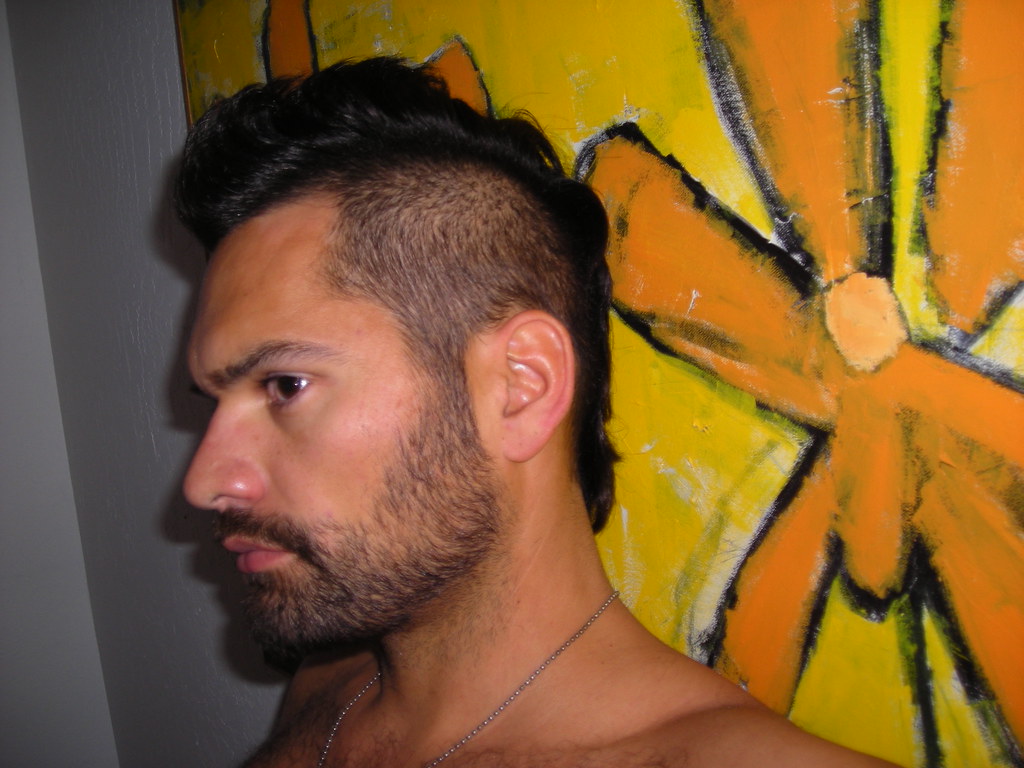
My photo
I've got one foot in the grave and the other's in my mouth.

Poetry Disclaimer

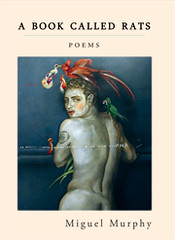
My work has been awarded the Katherine C. Turner Prize from the Academy of American Poets, a Swarthout Award, and has twice been nominated and shortlisted for the Pushcart Prize. My first book, A Book Called Rats, was selected for the Blue Lynx Prize for Poetry (Eastern Washington University Press 2007). I'm curating editor for the online journal of poetry: PISTOLA and my poems and reviews most recently appear in Massachusetts Review, Beloit, Ploughshares and RAIN TAXI. I currently teach writing and literature at Santa Monica College in southern California.
bookcalledrats