A HYBRID NOTEBOOK OF POETICS AND PORNOGRAPHIES

Pornography Disclaimer

This is a an imaginary diary of facts, confessions, or messages. This is a notebook of working but broken ideas, lines, images, notes on books I'm reading, writers I admire, and brief fantasies of language. Here unfiltered  all mannerings pseudo-private, publicized, ur-. Here I am art and unrevealed: poetic, political and pop. These are my moonlit rough beginnings and should not be taken literally, directly, truthfully, reliably, and none of it is legally binding. These lies are all choreographed, but only haphazardly. Beware.
Showing posts with label King Lear. Show all posts

25.6.09

BEWITCHING HER BREATH

Read the first section of Jorie Graham's Sea Change after midnight. I don't want to admit this. Reading her poems aloud to myself. I cried. I don't know what for. Surf and sacrifice. They are not metaphysical so much as they are storm-full. Reading them aloud you get the feeling you are Lear, dethroned, naked, mad. Tearing your self against the elements.

I know she is unpopular to many poets who want a neat line, a nice stanza, the beauty of a clear image. I know I couldn't get through the book Never. But she's mad. She's on to something. These poems are daring for their risk in form, which I'll argue are not just pretentious, or didactic, or overly scaffolded. And if these poems are conscious of environmental politics, their politics is inward and not forced onto the reader like an agenda (much like another overlooked book, last year's Warhorses, by Yusef Komunyakaa: a timely, necessary consideration of our still warring nation.)

These poems are bewitching, I think, with a breath that reminds one of what it's like to read Whitman aloud. Whitmanesque is her breath, but not for any stylistic catalogues. Perhaps there is a likeness here in Graham's recognition that the body, in all its gross manifestations, is sacred fodder, but hers is no Whitmanian reincarnation of Blake's cosmic polarities. Graham's breath is large and contradictory and incantatory for its sheer expansiveness, its successive phrasings that are at once thought, description and prayer. Prayer, as in a seeking, a calling of the voice for a communion--with spirit, with the forces that are nature, the great instigator, the origin of movement, invisible, myopic prestidigitator, energetic, ionic, harp string. Hers is the human voice itself, thinking, moving, Joycean:

(I've copied the poem, including / to indicate indentations of smaller phrases at the right-hand margin and stanza breaks to indicate each new line at the left-page margin in her work.

Vendler remarks this is a kind of "brush work" in which each line ends with strokes of phrases. This kind of long line with "brush-stroked" finishes is stylistically consistent in Sea Changes, and one can't help but relate Graham's line to the crashing of waves, the tidal spill and suck, on and against, the shore of the page.)

Futures

Midwinter. Dead of. I own you says my mind. Own what, own / whom. I look up. Own the looking at us

say the cuttlefish branchings, lichen-black, moist. Also / the seeing, which wants to feel more than it sees.

Also, in the glance, the feeling of owning, accordioning out and up, / seafanning,

& there is cloud on blue ground up there, & wind which the eye loves so deeply it / would spill itself out and liquefy / to pay for it--

& the push of owning is thrilling, is spring before it / is--is that swelling--is the imagined fragrance as one

bends, before the thing is close enough--wide- / eyed leaning--although none of this can make you / happy--

because, looking up, the sky makes you hear it, you know why we have come it / blues, you know the trouble at the heart, blue, blue, what

pandemonium, blur of spears roots cries leaves master & slave, the crop destroyed, / water everywhere not / drinkable, & radioactive waste in it, & human bodily

waste, & what, / says the eye-thinking heart, is the last color seen, the last word

heard--someone left behind, then no behind-- / is there a skin of the I own which can be scoured from inside the / glance--no, / cannot--& always / someone walking by whistling a / little tune, that's

life he says, smiling, there, that was life--& the heart branches with its / wild arteries--I own my self, I own my

leaving--the falcon watching from the tree--I shall torch the crop that no one else / have it whispers the air--

& someone's swinging from a rope, his rope--the eye / throbbing--day a noose looking for a neck--

the fire spidery but fast--& the idea of / friends, what was that, & the day, in winter, your lower back / started acting up again, & they pluck out the eyes at the end for / food, & don't forget / the meeting at 6, your child's teacher /wishes to speak to you

about his future, & if there is no food and the rain is everywhere switching-on as expected, / & you try to think of music and the blue of Giotto,

& if they have to eat the arms he will feel no pain at least, & there is a / sequence in which feeding takes

place--the body is owned by the hungry--one is waiting / one's turn--one wants to own one's / turn--and standing there,

don't do it now but you might remember kisses--how you kissed his arm in the sun / and / tasted the sun, & and this is your

address now, your home address--& the strings are cut no one / looks up any longer / --or out--no--&

one day a swan appeared out of nowhere on the drying river, / it

was sick, but it floated, and the eye felt the pain of rising take it in--I own you / said the old feeling, I want / to begin counting

again, I will count what is mine, it is moving quickly now, I will begin this / message "I"--I feel the

smile, put my hand up to be sure, yes on my lips--the yes--I touch it again, I / begin counting, I say, one to the swan, one,

do not be angry with me o my god, I have begun the action of beauty again, on / the burning river I have started the catalogue, / your world,

I speck tremble remembering money, its dry touch, sweet strange / smell, it's a long time, the smell of it like lily of the valley

sometimes, and pondwater, and how / one could bend down close to it

and drink.


Reading these poems quietly in your head is useless. They must be spoken aloud, they must be spoken for you to lose and catch your breath, so that the whirling can become dervish, so the austerity of the voice can grow into Whitmanesque proportions, so the prayer of being can recognize the human Job, faced with the impossible task of overcoming himself, knowing and not knowing at the same time, caught in the tempest that is human nature, troubled and vulnerable and fighting, the body poised against the storms, world and Self.

Friends and Strangers, steal it if you can!

. . . . . .

26.10.07

RETURN OF THE NEW STORM

. . . . . . .


. . . . . . .

It's eleven thirty at night Friends and Strangers and I'm craving a cup of coffee. It's Friday night and I've got a French film with Isabelle Huppert in it and her two twin sons. Think quiet Cain and Abel meet Freud reading Shakespeare's HAMLET. I also have a stack of books here I'm madly in love with, though I haven't opened them. Bolano anyone? Or Ugresic's MINISTRY OF PAIN , or MY NAME IS RED by Orhan Pamuk? A small novel by A. Bioy Casares, or an essay, something by Batailles, or a chapter from Kristeva's POWERS OF HORROR. Pain, Horror, Beauty--my favorite spectors. It's a wonderful Friday night to be so alone. I haven't been here online in a month. The movement is moonlight, its musical touch and absence. How do all of my days and hours appear like this one drink? Oh speaking of Shakespeare,

(My younger sister--whose marriage I wrote this past summer--called tonight drunk out of her mind, listening to Rufus Wainwright croon some tune to impossible love and asked me what I was doing, how was my week? As soon as I said making coffee, reading, the gunshot of her silence fired! Oh I'm such a dork, so filled with instensity I'm lost to everything, to everyone alive. Why do I worry about it? Relent. What's the line from Rilke's sonnet? "What pains you most? To it assent. If drinking is a bitterness, be wine.")


Tuesday night October 23 I went and saw Ian McKellan and the Royal Shakespeare Company play KING LEAR. I couldn't begin to tell you what this night meant for me. Great theater changes you. This night changed me. Its small, unnameable levers pressed, lifted. The locks came unjambed. Something not, was. I lived longer than my oldest moment. I've watched every possible version of this play you can rent, and they all fall flat. Lear's anger with Cordelia in the beginning has always been something I couldn't understand, except mathematically. Except as plot. It's incomprehensible, even when Paul Scofield, or Lawrence Olivier, or James Earl Jones (a version I was hoping great things for) attempt the hurtle of this first scene.

Of course there is the question of nature and fate. The first time I cried in the play is in the scene of Lear's return to dignity, as he realizes himself, and finishes his tantrum: "Is there any cause in nature that makes these hard hearts?" Perhaps this is what we are, filled with dignity and failure and an inability to become either thing fully. Our lives are beautiful and flawed, and we don't get better than we are, and we struggle to know with any kind of real satisfaction, the necessary why of our existence. We cry, he sings to the blinded Gloucester, to know we have come to this great stage of fools.

So here is Ian McKellan each thing: royal, foolish, wise, mistaken, stubborn, divine, weak, angry, noble, transformed, modest, dignified, and failed. In the best sense, I believed in him. In the end of the play I was struck with something I hadn't fully realized before, something I can't fully explain. It's the difference between seeing Goya's sunflowers in a brochure, or online, and seeing them for the first time in a museum. Context--the performance of the thing, the LIFE of the thing--killed me. As Lear lays down his three daughters all in white to die, and Edgar speaks to us at the end--as Trevor Nunn's vision fills the stage with gold and white from above, and shadow and rubble behind, all dressed in a rising organ chord, raised minor--I had a new sense of what it means to feel that a play is cathartic. It's not so much having escaped a devastation, but the dark elation of facing the ruin of what a human life is--our own human life: this is what means that I will live and die, and in my skin know the difficult ardor of navigating one time to an other: "The oldest hath borne most. We who are young shall never see so much or live so long." Our skin will be torn into our secret life, and our failure as a person will marry our great ambition, and we will be beautiful and lost, singing our answerless songs and that, Friends and Strangers, is the sad fucking truth.

. . . . . .


. . . . . .

Since my last funeral I've been wearing a thumbprint, a gold leaf with two diamonds melted into it. A kind of amulet. A remembrance, but also a totem against forgetting that we leave here with nothing. What we've made is our brokenness, and this attempt itself is our meaning, our beauty. I think of Mishima and Plath, Crane and Arenas, Hamlet and Ophelia, and their two kinds of suicide. Any philosophy of suicide is divided between feeling and choice. What is bravest, noblest, most honest? Something different for me as the deaths of my two grandfathers. Two visions of being left behind: one grandmother who hasn't forgiven herself and so the world is meaningless ruin. One grandmother who seems to weigh the world with sorrow and laughter, memory and wonder. Which is the more orphan in her frailty? I'm not asking rhetorically. They both look forward as if it were the only past. I'm looking for an enemy but find my beloved. And I know that wearing my nugget of gold feels more Borges than Lowell:


The Enigmas

I who am singing these lines today
Will be tomorrow the enigmatic corpse
Who dwells in a realm, magical and barren,
Without a before or an after or a when.
So say the mystics. I say I believe
Myself undeserving of Heaven or Hell,
But make no predictions. Each man's tale
Shifts like the watery forms of Proteus.
What errant labyrinth, what blinding flash
Of splendor and glory shall become my fate
When the end of this adventure presents me with
The curious experience of death?
I want to drink its crystal-pure oblivion,
To be forever; but never to have been.


Friends and Strangers, here is my cup of never, my cup of always, my coffee in the night. Here is my brief letter to you to sail the vast numb harm of the infinite, against which we leave only pieces of who we are, our art and satellite, our artifact, the ruins of a memory, the stage of it glowing still backward in the mind, and this--

. . . . . .
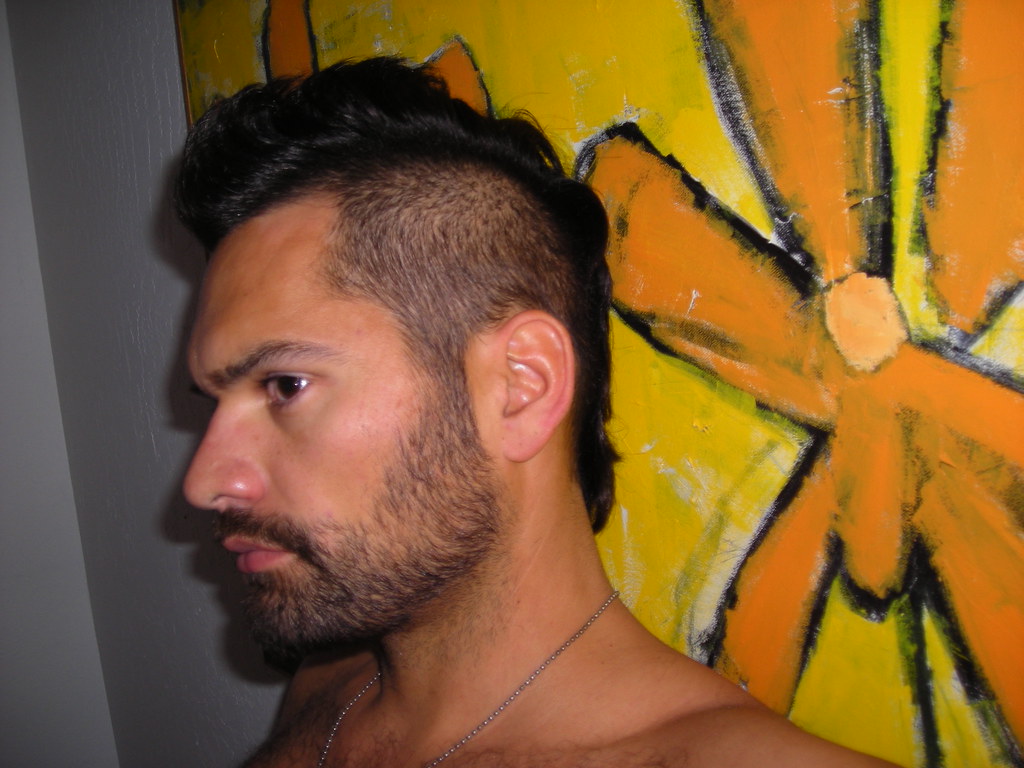
My photo
I've got one foot in the grave and the other's in my mouth.

Poetry Disclaimer

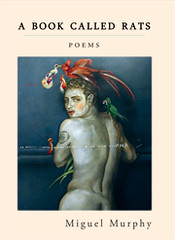
My work has been awarded the Katherine C. Turner Prize from the Academy of American Poets, a Swarthout Award, and has twice been nominated and shortlisted for the Pushcart Prize. My first book, A Book Called Rats, was selected for the Blue Lynx Prize for Poetry (Eastern Washington University Press 2007). I'm curating editor for the online journal of poetry: PISTOLA and my poems and reviews most recently appear in Massachusetts Review, Beloit, Ploughshares and RAIN TAXI. I currently teach writing and literature at Santa Monica College in southern California.
bookcalledrats